




 Do I Need Water Damage Restoration After My Water Heater Leaks?
A leaking water heater can create anything from a small puddle to a significant amount of water spreading across your home. Sometimes you catch a slow drip early and the surrounding area remains relatively dry. Other times, a tank fails and releases enough water to reach walls, flooring, cabinets, or adjoining rooms before anyone realizes what happened. That difference matters when deciding whether you simply need to clean up some water or call a professional for water damage restoration in Boise.
At Red Truck Disaster Response, one of the first things we want homeowners to understand is that the amount of water you can see does not necessarily tell you how much of the structure got wet. Water moves quickly, and finished surfaces can hide moisture long after the visible puddle disappears.
A Slow Leak Can Still Cause Water Damage
A dramatic tank failure gets attention immediately. A slow water heater leak can actually be easier to overlook because homeowners may see only a small amount of water around the base of the unit. However, a leak that continues for days or weeks has time to affect surrounding materials. Water can seep beneath flooring, wick into drywall, reach baseboards, or penetrate materials behind the water heater where you cannot easily inspect them.
The location of the unit also makes a difference. A water heater sitting on a concrete garage floor may present a different restoration situation than one located in an interior utility closet surrounded by drywall and finished flooring. Even in a garage, though, water can reach wall materials, stored belongings, adjoining rooms, or other vulnerable areas.
What Happens When a Water Heater Tank Fails?
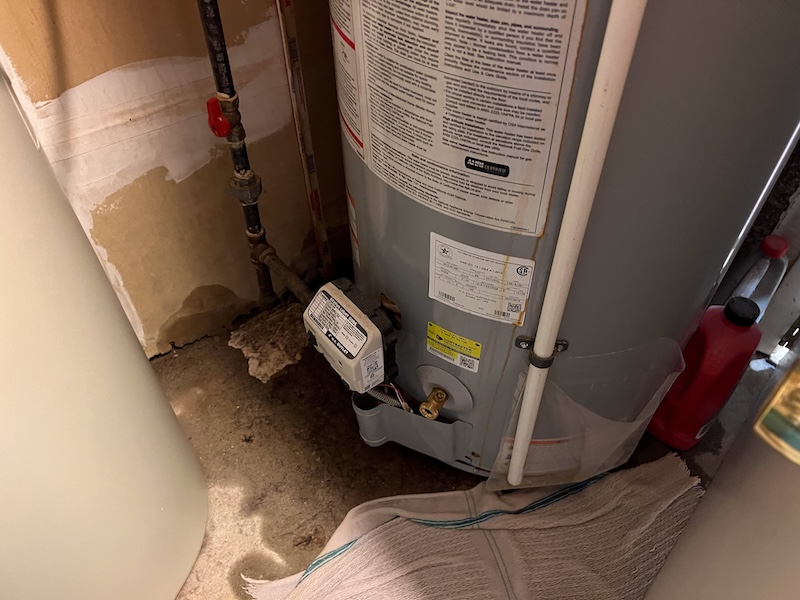 When a tank or connection fails suddenly, the situation changes quickly. A conventional tank-style water heater may contain dozens of gallons of water, and the water supply can continue adding to the problem depending on the nature of the failure. Once released, water follows the easiest path available. It may travel under walls, through doorways, beneath flooring, or into nearby rooms before you can shut off the source.
After a significant water heater leak, check beyond the immediate puddle for signs such as:
- Wet or swollen baseboards
- Damp drywall near the floor
- Water beneath nearby flooring
- Moisture in an adjoining room
- Warped or lifting flooring
- Damp carpeting or carpet pad
- Water that has entered cabinets or closets
- Musty odors developing after the initial cleanup
If you see one of these signs, simply removing the visible water may not be enough.
Water Can Hide Beneath Finished Surfaces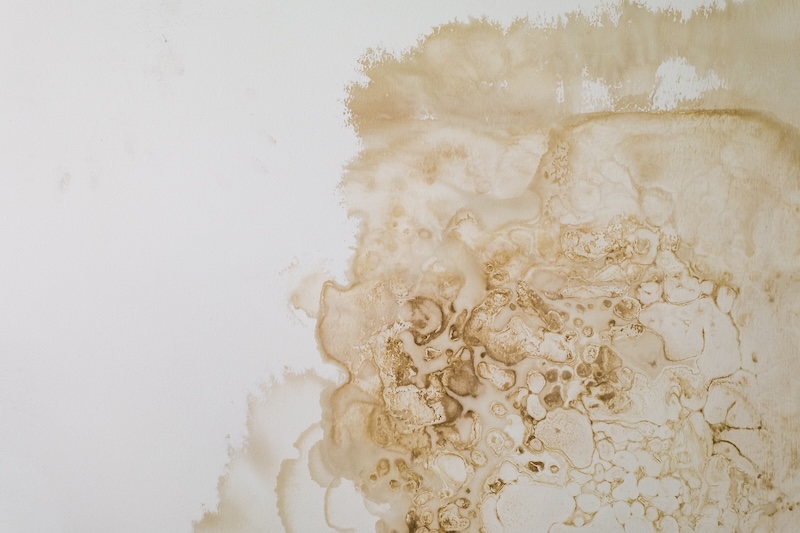
This is where homeowners often underestimate water damage. The floor can look dry from above while moisture remains trapped underneath it. Different flooring materials respond differently to water. Carpet pad can hold significant moisture beneath carpeting, while water may travel under laminate, luxury vinyl plank, or other finished flooring. Wood products can absorb moisture and change dimension, while water reaching the perimeter of a room may wick upward into drywall.
As a result, wiping up the floor tells you only what happened on the surface. Professional moisture-detection equipment can help us determine whether water traveled into areas that are not obvious during a visual inspection.
That information helps distinguish a minor cleanup from a restoration project requiring drying equipment or removal of affected materials.
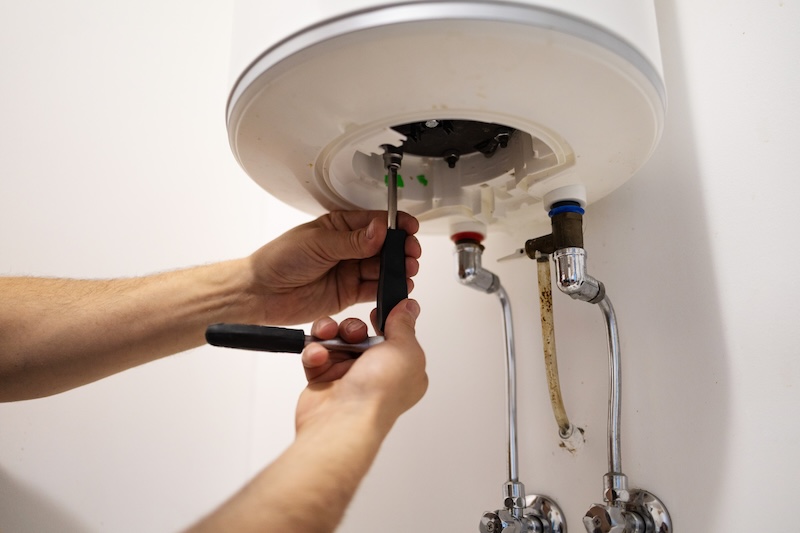 What Should You Do When Your Water Heater Leaks?
Your first priority is stopping additional water from entering the structure if you can do so safely. Depending on the situation, that may mean shutting off the water supply to the water heater or shutting off the home’s main water supply. Because water heaters involve electricity or gas, use caution around the equipment and do not take risks if you are unsure what to do. Once the immediate source has been controlled, contact an appropriate plumbing professional to address the water heater itself.
Then turn your attention to the building materials around it. A useful initial response includes:
- Stop the water source when it is safe to do so.
- Keep people away from electrical hazards or standing water near electrical equipment.
- Move belongings away from the affected area when possible.
- Document visible damage for your records.
- Avoid assuming an area is dry based only on appearance.
- Have questionable areas inspected for hidden moisture.
The faster you identify where the water traveled, the sooner you can make an informed decision about what needs to happen next.
When Does Cleanup Become Water Damage Restoration?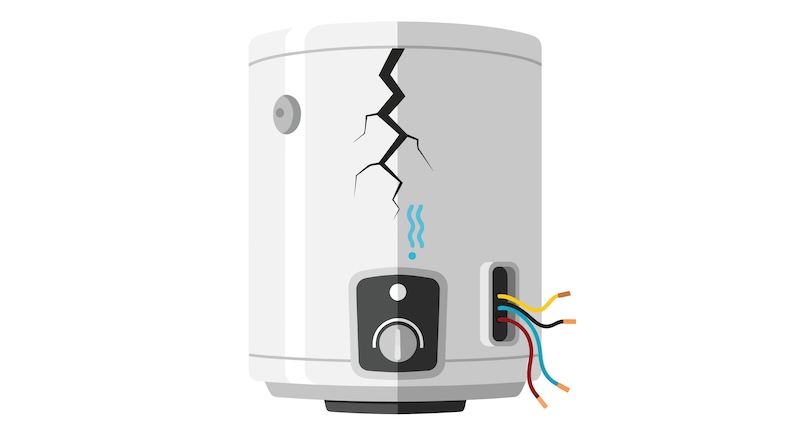
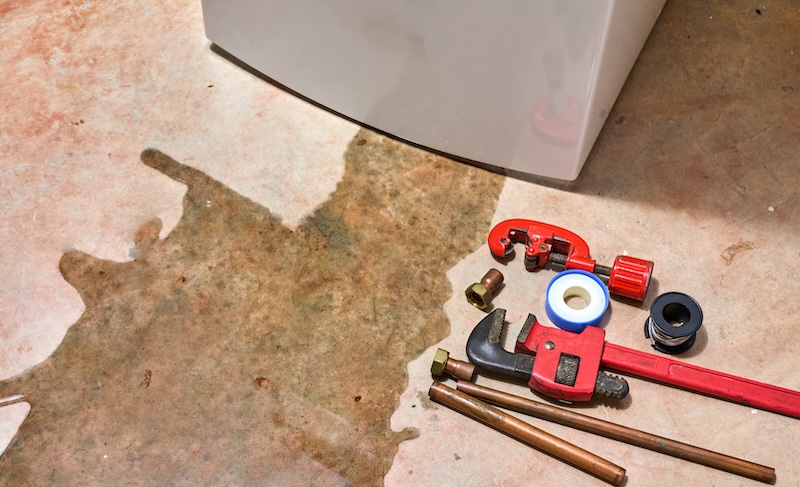 If a small amount of water lands on a nonporous surface, you discover it immediately, and nothing else gets wet, ordinary cleanup may be all that is necessary. Not every water heater drip requires a restoration project. Professional restoration becomes more important when water reaches absorbent or concealed building materials. That may include drywall, insulation, carpet pad, wood, cabinets, subflooring, or spaces underneath finished floors.
Time also matters. Materials that remain wet create a different situation than water that is discovered and removed immediately. Rather than guessing based on the size of the original puddle, we want to determine what is wet now and whether those materials can be dried effectively.
 Why Moisture Testing Matters After a Water Heater Leak
By the time we arrive, homeowners have often already cleaned up the visible water. That is helpful, but it does not answer the most important question: Did the water go anywhere else? At Red Truck Disaster Response, we use professional moisture-detection equipment to investigate beyond what we can see. Depending on the situation, we may check surrounding walls, flooring, baseboards, adjacent rooms, and other areas where water could have traveled.
If everything is dry, that is valuable information too. We do not want homeowners assuming they need extensive restoration when they do not. Our inspections are free, so if you are unsure whether a water heater leak caused hidden damage, we can help you determine what actually happened.
Don’t Let the Size of the Puddle Make the Decision
A large water heater failure obviously deserves immediate attention, but a smaller leak should not automatically be dismissed. Location, duration, building materials, and how far the water traveled matter just as much as the amount you initially saw. If your water heater leaks in Boise or elsewhere in the Treasure Valley, stop the source when possible, address the failed equipment, and make sure the surrounding structure is truly dry. Finding hidden moisture early can often prevent a manageable water-loss situation from becoming a much larger restoration problem.
At Red Truck Disaster Response, we provide free inspections to help homeowners understand the extent of water damage and determine what steps, if any, are needed next.
About Red Truck Disaster Response in Boise, Idaho
 Red Truck Disaster Response provides 24/7 emergency cleanup and disaster restoration services throughout Boise, Meridian, Eagle, Nampa, Garden City, Kuna, Star, and the surrounding Treasure Valley. Founded in 2016 and voted Idaho’s Best Disaster Response Company in 2025, Red Truck Disaster Response specializes in water damage restoration, mold remediation, sewage cleanup, crawlspace restoration, fire and smoke damage cleanup, reconstruction, and emergency disaster cleanup. When water damage affects your home or business, the Red Truck team can typically respond quickly, assess the damage, and begin the cleanup and drying process.
This blog is for informational purposes only. If you have questions about your specific situation, we will be happy to come out and look at no charge. Inspections are always free.
