



 What Happens When Water Gets Under Hardwood, Laminate, or LVP Flooring?
You clean up the water, run a fan, and by the next morning the floor feels dry. Problem solved? Maybe not. When water reaches hardwood, laminate, or luxury vinyl plank (LVP) flooring, what you see and touch from above tells only part of the story. Water can work between planks, around edges, through seams, and underneath finished flooring. Once it gets there, evaporation becomes much more difficult.
At Red Truck Disaster Response in Boise, Idaho, we don’t determine whether a floor has dried simply by touching the surface. We need to understand what type of flooring got wet, how far the water traveled, and whether moisture remains trapped underneath.
How Does Water Get Under Flooring?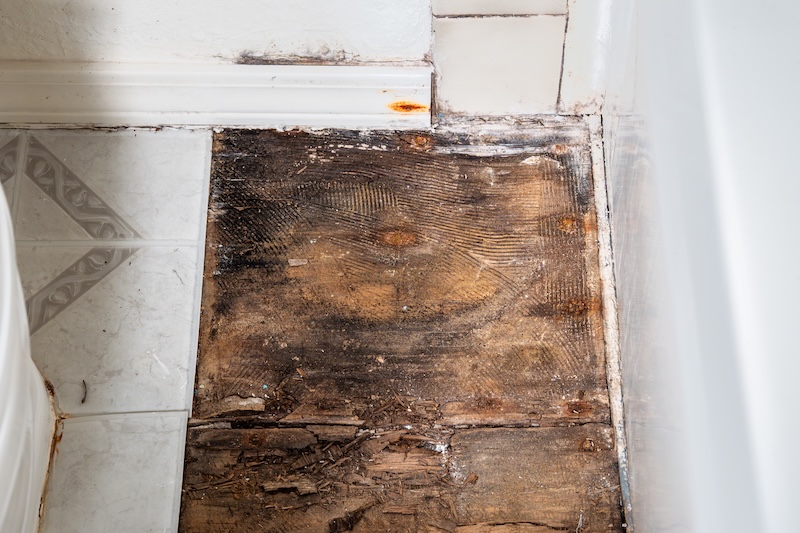
Water doesn’t need a large opening to travel beneath a floor. A leaking dishwasher, overflowing toilet, broken pipe, washing machine problem, or other water loss can release enough water to spread across a room. As it moves, moisture finds seams between planks, edges along walls, transitions between flooring materials, and other pathways.
Once underneath, water may continue traveling beyond the visibly wet area. You can wipe the surface dry while moisture remains below, affecting flooring, underlayment, adhesive, or the subfloor. That’s why the original puddle doesn’t necessarily show us the full extent of the problem.
What Happens to Hardwood When It Gets Wet?
Real hardwood naturally reacts to moisture. Wood absorbs water, which can cause boards to swell or change shape. Depending on the amount of water and how long it remains, homeowners may eventually notice cupping, crowning, gaps, discoloration, or other changes. However, those changes don’t always appear immediately. A hardwood floor can look relatively normal shortly after a water loss even though moisture levels have increased underneath.
That’s one reason acting quickly matters. Rather than assuming wet hardwood automatically needs replacement—or assuming it will dry fine on its own—we evaluate the moisture levels and materials involved.
Laminate Flooring Reacts Differently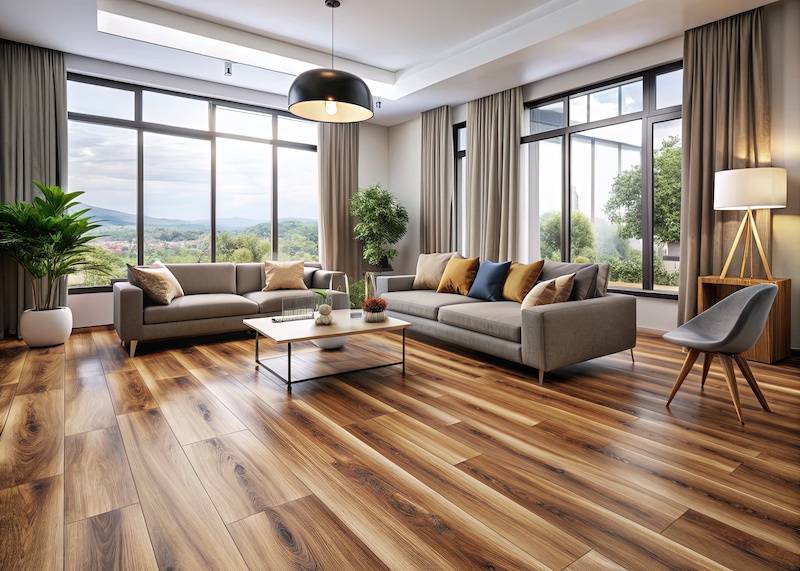
Laminate may resemble hardwood, but its construction differs significantly. Many laminate products contain a fiberboard-based core beneath the decorative surface. When water penetrates seams and reaches that core, the material can absorb moisture and swell.
You might notice raised edges, buckling, separation, or changes around plank seams. Once the core physically swells or deteriorates, simply drying it can’t necessarily reverse the damage. That makes identifying moisture beneath laminate especially important. A relatively small amount of visible water may have reached materials that don’t respond well to prolonged exposure.
Isn’t LVP Waterproof?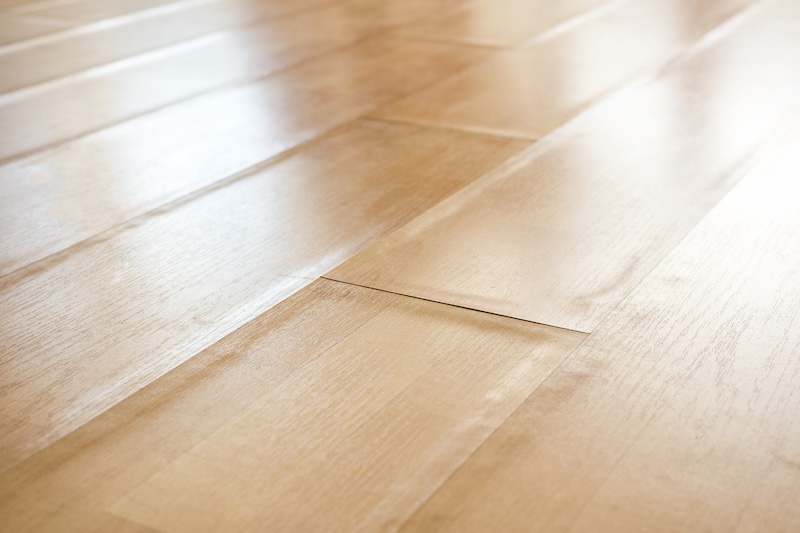
Many luxury vinyl plank products are marketed as waterproof, and the plank itself may resist water extremely well. That doesn’t mean everything beneath it is waterproof. Water can still travel through seams, around the floor’s perimeter, beneath baseboards, or from an adjoining area. Once moisture gets underneath, the LVP may actually make evaporation more difficult.
The planks could look perfectly fine while the underlayment or subfloor remains wet. Sometimes, therefore, the biggest concern isn’t whether water damaged the LVP.
The concern is what the water reached underneath it.
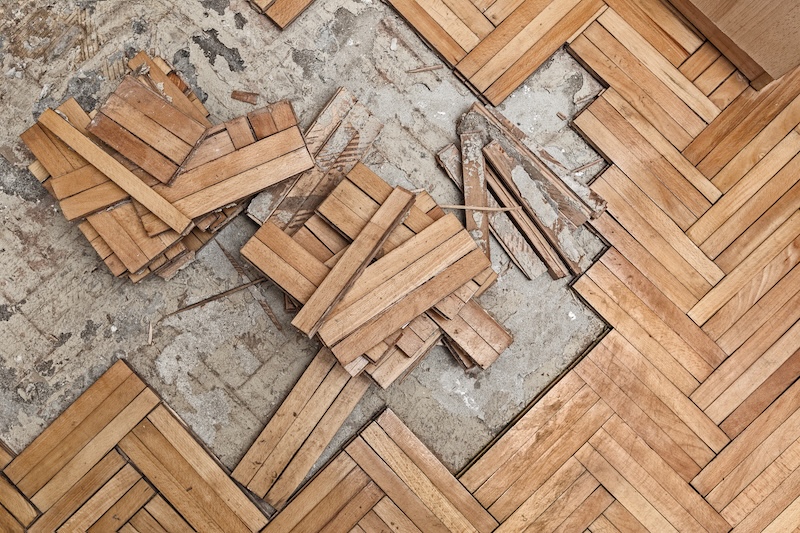 Don’t Forget About the Subfloor
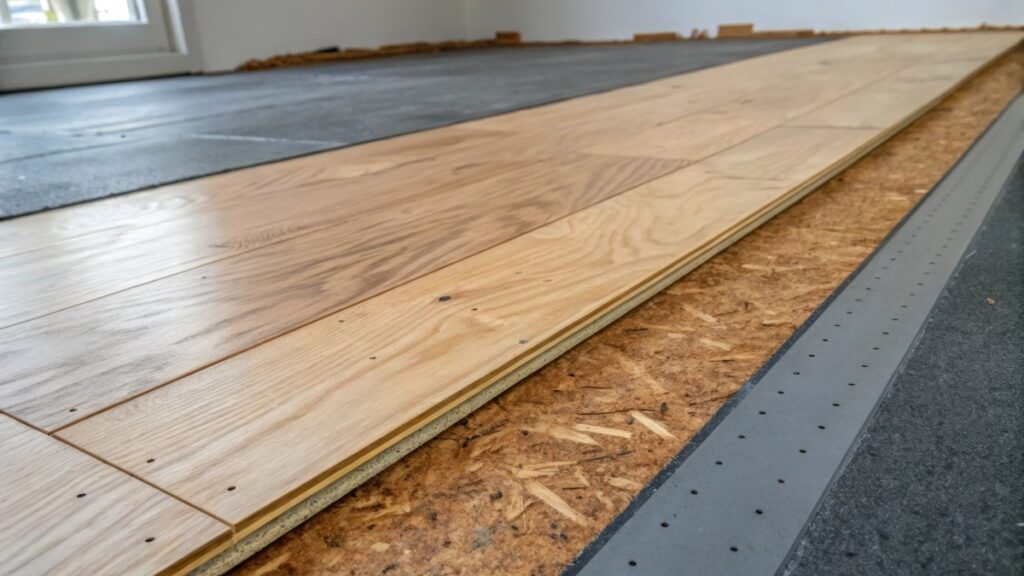
Hardwood, laminate, and LVP all have one important thing in common: something supports them. Depending on the home’s construction, the subfloor may consist of plywood, oriented strand board (OSB), concrete, or another material. Water that penetrates finished flooring can reach that layer and create another drying challenge.
Wood-based subfloors can absorb moisture and may swell or remain wet after the visible flooring feels dry. Concrete responds differently, but moisture beneath flooring can still affect underlayment, adhesives, and other components.
For restoration purposes, we need to consider the entire flooring assembly—not just the material you walk on.
Why Doesn’t the Water Just Evaporate?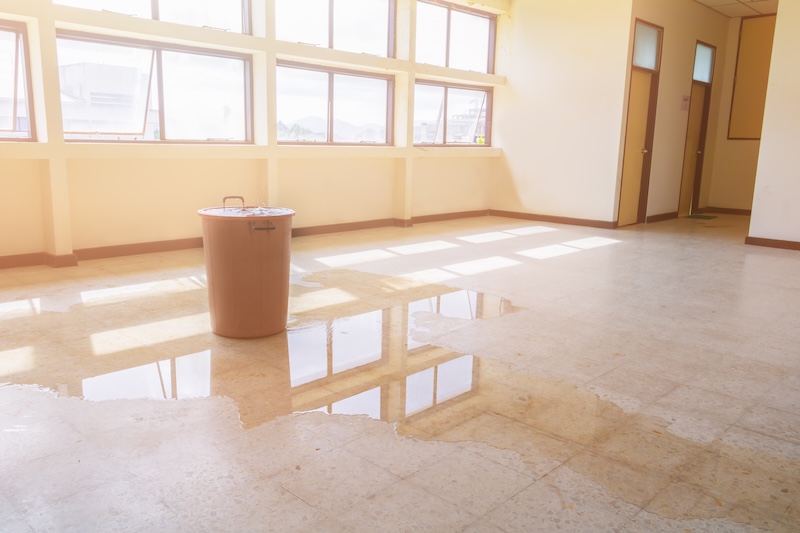
A puddle sitting in the open has plenty of exposure to air. Water trapped between layers does not. Flooring limits airflow and can slow evaporation considerably. Underlayment, vapor barriers, adhesives, and other materials may further affect how moisture moves. This creates a situation where the top of the floor dries long before the materials beneath it.
Running a household fan may help with exposed surface moisture, but air moving across an LVP plank doesn’t necessarily reach a wet subfloor underneath. That’s why a dry-looking surface can’t confirm that everything below has dried.
Moisture Testing Helps Us See What Eyes Can’t
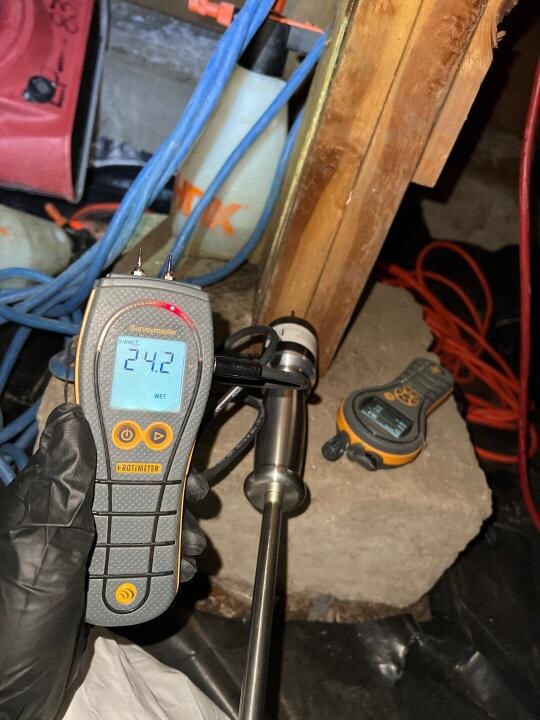 At Red Truck Disaster Response, we use professional moisture-detection equipment to evaluate affected areas. Moisture testing helps us identify locations that may require further investigation. We can also develop a moisture map to document where elevated readings occur and monitor those areas during the drying process.
That gives us more useful information than simply asking whether the floor feels dry. Testing may show that moisture extends beyond the original spill area. It can also help us track progress and determine when affected materials have reached appropriate drying goals.
Does Wet Flooring Always Have to Come Out?
Not necessarily. Water damage restoration doesn’t mean automatically removing every material that gets wet. Whether flooring can remain depends on factors such as the flooring type, amount and source of water, length of exposure, condition of the materials, and whether we can effectively dry the areas underneath. Sometimes specialized drying methods may help address moisture within a flooring system. In other situations, removing flooring may provide the appropriate way to reach wet materials beneath it.
We base that decision on the conditions we find rather than applying the same solution to every floor.
A Dry Surface Doesn’t Tell the Whole Story
If water from a leak, overflow, or other incident reaches your flooring, cleaning up standing water is important—but don’t assume the job ends when the surface dries.
At Red Truck Disaster Response, we inspect the affected area, test for moisture, determine how far the water traveled, and evaluate the materials underneath. Because when water gets beneath hardwood, laminate, or LVP, what looks dry on top may tell you very little about what’s happening below.
About Red Truck Disaster Response in Boise, Idaho
 Red Truck Disaster Response provides professional water damage restoration and disaster response services throughout Boise and the rest of the Treasure Valley. Our experienced team responds quickly to water emergencies, evaluates affected areas, uses professional moisture detection and drying equipment, and develops restoration plans based on the conditions we find. We help homeowners and businesses address water damage with thorough inspections, clear communication, and careful attention to affected materials.
This blog is for informational purposes only. Every water damage situation is unique, and restoration needs vary depending on the extent of the damage. If you suspect water damage in your home or business, Red Truck Disaster Response offers free inspections to help determine the best course of action.
